






We have sent fobs to the Arctic, and had them ride across the Moroccan desert all to reinforce what we already know: our Glow Fobs are ready for any adventure you throw their way. We believe the only thing you should search for is your next adventure.

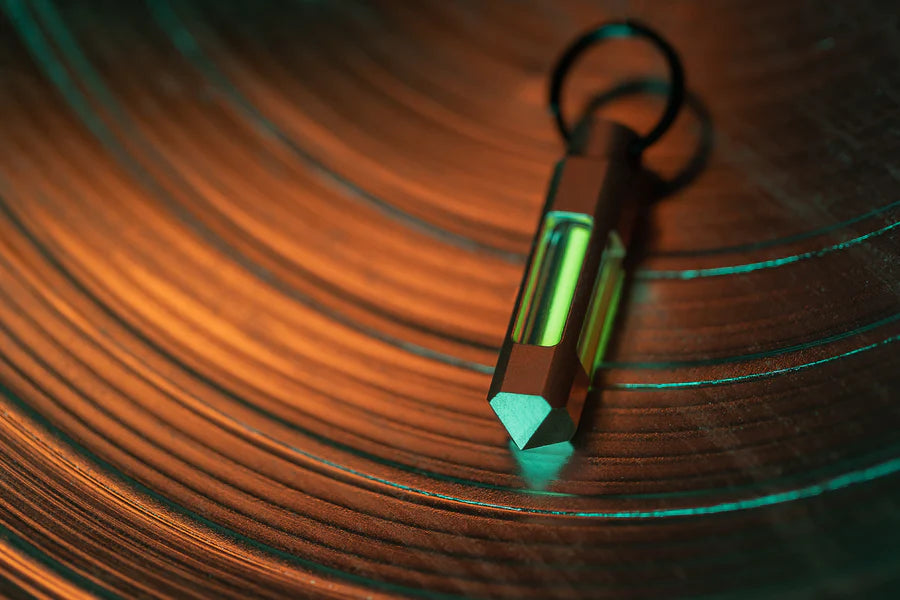
Beyond the profound usefulness, the Glow Fob is designed to fit in perfectly with any aesthetic. Brighten up your key chain, tent zippers, or back pack with this cerakote finished steel Glow Fob.

Boat Keys. ATV Keys. Car Keys. Shed Keys. Safe Keys. Backpack zippers. Tent zippers. Medical Gear zippers. Attached a fob that will ensure no matter the situation, when the light is gone, if the power is out, you can locate your important things.
Tritium
Tritium is an isotope of Hydrogen. When Tritium gas is encapsulated in glass vials with phosphorescent pigments, a self-luminous (glow in the dark) device is created.
Tritium is unable to diffuse through these glass vials. Further, since Tritium is a low energy beta emitter, even if a tritium vial was broken, it is NOT dangerous externally (its beta particles are unable to penetrate human skin).
No. That’s the best part about Tritium, it’s always “on”. Tritium requires no outside charge like traditional glow-in-the-dark items. It’s completely self-powered.
(Customer thinks it’s broken/off) Tritium offers a very localized glow in low to no-light conditions. Make sure to take it in the dark room and allow your eyes time to adjust to the environment.
Tritium has a half-life of 12.23 years but it will still be useable for longer than that.
Yes, Tritium is protected in glass vials.
Tritium can be used at very high and low temperature extremes as it is commonly used in military applications such as watches, compasses, and gun sights.
Most parts are built to order. Tritium is usually only a month or two old.
WHY TRITIUM EDC?
Seeing is Believing
Tritium has been used in military applications for decades. Low light visibility is sometimes crucial for survival. Why not offer this same technology in what we carry every day?


